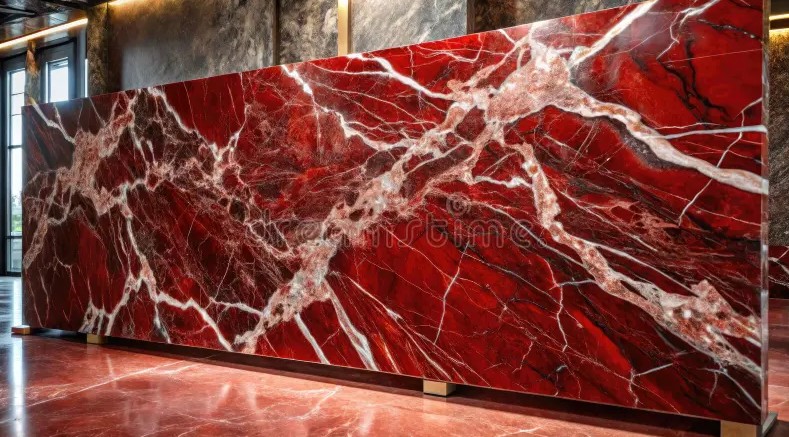
There are stones that whisper, and there are stones that command attention. Rosso Levanto belongs firmly to the second category. Quarried from the rugged hills of Liguria in northern Italy, this deep crimson marble has been a signature material of Italian craftsmanship for centuries, lending its dramatic intensity to cathedrals, palaces, and now, the most considered residential interiors being built in Australia today.
For homeowners, architects, and interior designers chasing something genuinely rare, Rosso Levanto offers a rare combination of historical pedigree and contemporary relevance. It is bold without being brash, refined without being restrained, and absolutely impossible to ignore.
A Stone With Centuries of Italian Heritage
The Rosso Levanto quarries sit in the Apennine mountains near La Spezia, where this distinctive red marble has been extracted since Roman times. The Romans used it to decorate temples and villas. Renaissance architects reached for it when they wanted to inject warmth and grandeur into otherwise austere stone buildings. Walk through the great basilicas of Florence and Rome and you will see Rosso Levanto inlaid into floors, framing altars, and accenting columns.
What gives this stone its enduring appeal is its appearance. The base colour is a deep, saturated red, somewhere between burgundy and oxblood, threaded with intricate white and green veining. Each slab tells a different story, with the veining patterns ranging from soft, cloud-like dispersions to sharp, lightning-strike fractures. No two pieces are alike, which means every installation becomes a one-off work of art.
What Makes Rosso Levanto Different
Plenty of stones come in red. Few carry the depth, character, or provenance of this particular Italian marble. The richness of colour in Rosso Levanto marble comes from naturally occurring iron oxides within the limestone, formed over millions of years of geological pressure and mineral deposition. The result is a colour that simply cannot be replicated by engineered or porcelain alternatives.
The white veining, often dense and web-like, provides striking contrast against the red base. In some slabs, occasional flashes of green or grey mineralisation add further complexity. When polished, the stone develops a deep, reflective lustre that catches light beautifully, particularly in spaces with natural sunlight or warm ambient lighting. Honed finishes, on the other hand, soften the drama and produce a more matte, contemporary look that suits modern minimalist interiors.
Where Rosso Levanto Belongs in the Home
This is not a stone for understatement. Rosso Levanto is at its best when it is given room to breathe and the opportunity to take centre stage.
In kitchens, it works exceptionally well as a feature island benchtop or as a full-height splashback behind a cooktop. Paired with neutral cabinetry in cream, charcoal, or pale timber, the red tones bring warmth and drama without overwhelming the space. For those building entertainer’s kitchens or open-plan living areas, a Rosso Levanto island becomes the focal point that the rest of the room organises itself around.
Bathrooms are another natural home. A Rosso Levanto vanity top, shower wall, or bath surround transforms an everyday utility space into something resembling a private spa or boutique hotel suite. The stone pairs beautifully with brushed brass, aged bronze, or matte black fixtures, all of which amplify its luxurious character.
Beyond the obvious applications, designers are increasingly using Rosso Levanto for fireplace surrounds, statement coffee tables, dining table tops, and even as a bookmatched feature wall in living rooms or formal entryways. When bookmatched, the symmetrical veining creates almost Rorschach-like patterns that become genuine conversation pieces.
Pairing Rosso Levanto With Other Materials
Despite its boldness, Rosso Levanto plays surprisingly well with other materials. It loves the company of warm timbers, particularly walnut, oak, and smoked elm. Against polished concrete or microcement, it provides a colour anchor that lifts otherwise industrial interiors. Brushed brass and aged bronze are its natural metallic companions, while polished nickel and chrome can work for a cooler, more contemporary edge.
For those exploring contrasting stone pairings, Rosso Levanto sits beautifully alongside Calacatta or Statuario whites, where the deep red plays against the bright clean marble for a high-drama, high-end result. It also pairs well with travertine in warmer, more Mediterranean-inspired schemes.
When considering other red marble slabs for comparison, Rosso Levanto sits at the more refined and architectural end of the spectrum. Where some red marbles lean rustic or overtly veined, Rosso Levanto retains a polished sophistication that suits both traditional and contemporary projects.
Caring for Rosso Levanto
Like all natural marbles, Rosso Levanto rewards thoughtful care. Sealing on installation is essential, and periodic resealing every twelve to eighteen months helps maintain its resistance to staining and etching. Acidic substances such as lemon juice, wine, and vinegar should be wiped up promptly to avoid surface marks, although for many homeowners the gentle patina that develops over years of use is part of the stone’s charm.
For daily cleaning, warm water and a pH-neutral stone cleaner are all that is required. Avoid abrasive pads, harsh chemicals, and generic kitchen sprays, which can dull the polish or damage the sealant over time.
A Statement That Lasts Generations
In an era of fast renovations and disposable design trends, Rosso Levanto represents the opposite philosophy. This is a stone with millennia of geological history and centuries of architectural credibility. It is chosen by people who want their home to feel considered, rooted, and quietly extraordinary. When installed well, it will outlast every trend, every renovation cycle, and every passing fashion.
For anyone planning a project where the materials need to do more than simply perform, where they need to define the entire character of a space, Rosso Levanto is one of the most rewarding choices available. It is a stone that turns rooms into experiences, and houses into homes worth talking about.