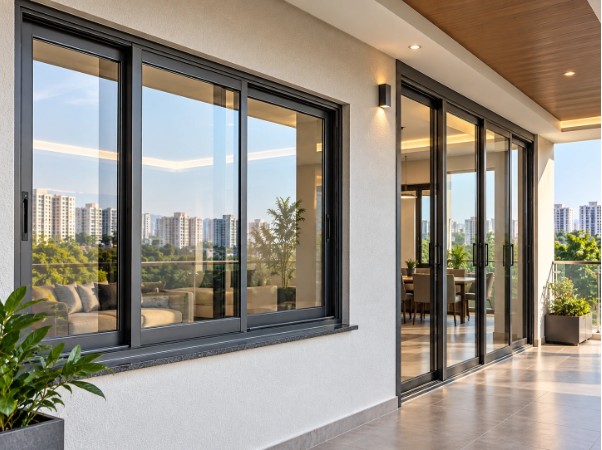
Every renovation hits the same point. The budget’s stretched, the quotes keep coming in, and you start looking for places to trim.
The trouble is, most people trim in the wrong places. They’ll splurge on a statement light fitting and a feature wall, then go for the cheapest windows on the market because “a window’s a window.” Five monsoons later, the feature wall’s been repainted twice and the cheap windows are the thing everyone complains about.
So where does the money actually matter?
How Do You Decide Where to Spend More in a Home?
Ask two questions about anything you’re buying. How hard is it to change later? And how much does it affect daily life?
Things that are fixed into the structure and affect comfort every day deserve the bigger share of the budget. Things you can swap out easily, or that are mostly about looks, are where you can save without much regret. It’s a simple filter, but it sorts almost every renovation decision into the right pile.
Why Do Windows Belong in the “Spend More” Category?
Try replacing one after the room’s finished. You’ll be chipping plaster off the wall, patching the paint around the new frame, and sweeping dust out of the corners for a week.
And you live with them all day. They decide how bright the room is at 8am, how loud the road is at night, how hot the bedroom gets by May. They’re also the thing standing between your floor and a July downpour.
Cheap ones go wrong in the same few ways. Frames warp or corrode. Seals harden and let in dust and water. Rollers seize, and sliders start dragging. You fix one thing, then another, and sooner or later someone says, “We should just replace these.” A well-made premium aluminium window mostly skips that whole cycle. It costs more on the day you buy it. It usually costs less by year ten.
Where Else Should Homeowners Spend More?
A few other things follow the same rule.
- Waterproofing is the big one. A damp patch on the bedroom wall never stays small, and by the time you notice it, the plaster underneath is already gone.
- Wiring and plumbing are next. They’re buried in the walls, you use them constantly, and redoing them in a finished home means breaking what you’ve just paid to build.
- Flooring in the hallway and living room takes a daily beating. And the kitchen counter and cabinet hinges get used more times a day than almost anything else in the house.
Notice the pattern. These are the structural, hidden, or heavily used parts of a home. Windows sit right alongside them.
Where Can You Safely Save?
On anything easy to change. Don’t like the paint colour in a year? Repaint it on a Sunday. Curtains look tired? Swap them. Same goes for cushions, rugs, the pendant over the dining table, even the sofa.
They still matter, of course. They’re a big part of how a home looks. But you can refresh them in a weekend, whereas a leaking window or a badly done electrical job hangs around for years. Put the money into the bones of the house first, and let the décor catch up over time.
What Drives Aluminium Window Prices?
Worth knowing, so you can tell good value from a bad deal. Size is the biggest factor. The type of window matters too: an aluminium fixed window with no moving parts usually costs less than an opening window of the same size, while sliders and casements carry hardware that adds to the price.
Glass choice plays a big part. Double glazing, tinted, toughened, or acoustic laminated glass all cost more than single clear panes, and they often pay for themselves in comfort. Finishes like wood-grain add a little. And an engineered, tested aluminium window system costs more than a locally fabricated frame, but it’s built to perform consistently for decades.
How Should You Compare Aluminium Windows Cost per Sq Ft?
Carefully, and never on the headline figure alone. Two quotes with a similar cost per sq ft can be for completely different products.
Check whether glass is included and what type, whether hardware and mesh are part of it, whether installation is covered, and what the warranty says for the frame versus the moving parts. A low aluminium window price that leaves out half of that isn’t really low. A slightly higher one on a certified system with a long warranty often works out cheaper over time.
Do You Need Premium Windows Everywhere?
No, and that’s where you can be smart. Put the premium spend on the windows that work hardest: large living-room openings, walls that face the monsoon, upper floors exposed to wind, and rooms near busy roads.
For smaller, sheltered rooms, value-range aluminium sliding windows or a simple aluminium casement window do the job well. Eternia’s range covers both ends, from its value-focused Essentials sliders and casements to its premium Duraslim systems, and all of them are built on Duranium, a special aluminium alloy Hindalco developed that’s 40% stronger than regular aluminium. So even the value end has the same core strength.
What Should You Never Compromise On With Windows?
Sealing, frame strength, and hardware. Those decide whether aluminium windows for home last twenty years or five.
Look for certified performance rather than claims. Eternia’s systems carry WiWA certification for wind, water, and air, with profiles backed by a 12-year warranty and hardware by 5 years. Numbers like those tell you the window is built to stay sealed and working long after the paint’s been redone a few times.
Good renovation budgets aren’t about spending less. They’re about spending in the right order. Structure and comfort first, looks second.
If windows are on your renovation list, Eternia’s premium aluminium windows, built on Duranium and backed by certified performance, are a sound place to put the part of the budget that needs to last.