A poem describes a house remembering its inhabitants. The accompanying video gives the building a face and makes its windows blink. That is one possible interpretation, but it settles the image before the listener has had much time to imagine anything else. The visual treatment has turned an open phrase into a specific animated object.
A poetry film can work differently. Its pictures can sit beside the language, contributing rhythm or atmosphere without illustrating every noun. The decision is not whether literal imagery is always wrong. It is whether this poem benefits from a single visual answer, or whether the film should leave some of its associations available to the listener.
Locate the Line That Has More Than One Reading
Read the poem without pictures and identify a line whose meaning remains open. In a hypothetical piece about returning home, a window might suggest welcome, observation, or separation. Those possibilities can coexist in the language. A film that immediately shows one particular reunion narrows the field, even if the scene is moving and well made.
Write down the readings the poem can reasonably support before choosing a scene. This is an editorial exercise, not a claim about the author’s private intention. If the poet is part of the production, discuss which associations matter to them. If the work is someone else’s, make sure the planned use is authorized and avoid presenting the film’s interpretation as the only meaning of the text.
An AI Video Generator can help explore an indirect visual response. MakeShot can create a scene from a written description, allowing the filmmaker to request a quiet physical image rather than paste the poem into a prompt and accept whatever literal story appears. A curtain lifting beside an empty window leaves different possibilities open than an invented reunion.
The distinction becomes clearer when the image is removed. Listen to the line again without the candidate. Has the picture added a useful tension, or has it merely repeated a word the audience already heard? Repetition can be deliberate, but it should earn its duration. A moving house face may dominate the sequence without adding anything to the poem’s more difficult emotional question.
Choose a visual relationship rather than an inventory of nouns. If a poem links memory with distance, the film might work with a reflection that becomes harder to see. It does not need to display a photograph, a clock, a suitcase, and a road simply because those objects seem associated with remembering. One sustained image can give the words more room than a rapid parade of symbols.
Try Movement That Suggests Rather Than Explains
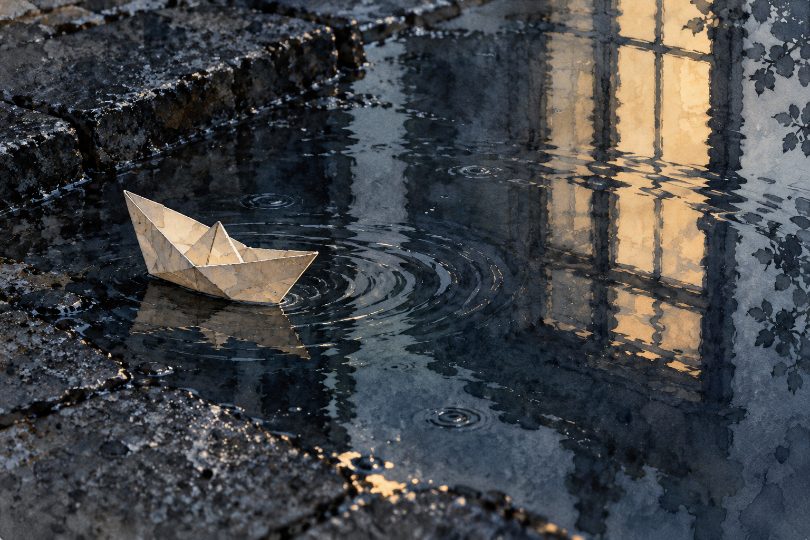
Begin with a modest action that can be observed without requiring a plot explanation. Water crossing a reflection, light moving across a wall, or a paper boat turning in a puddle can offer a change of state. Each has different associations, so the choice should come from the poem’s language and tone. Avoid assuming that slow motion automatically makes an image poetic.
MakeShot’s text-based generation can provide a sketch of that action. Keep the prompt focused on the visible scene instead of asking the model to understand an abstract emotional conclusion. For example, describe the boat and the changing reflection, then evaluate whether the result belongs beside the line. The tool supplies a candidate image; the filmmaker remains responsible for the relationship between image and words.
Compare an indirect candidate with a more literal one. The literal version may be easier to understand immediately, while the indirect version may allow the listener to make a connection gradually. Neither advantage is universal. A poem intended for a young audience may need a clearer visual foothold, while a brief experimental piece may welcome uncertainty. Let the intended audience and the particular passage guide the choice.
Do not confuse openness with arbitrary imagery. A beautiful ocean clip has little value if nothing in its movement, scale, or tone connects with the poem. Ask what the picture changes about the listening experience. If the answer is only that it looks cinematic, try a still image or no image at that point. Leaving room for interpretation still requires an intentional relationship.
Using an AI Video Generator also makes it easy to accumulate alternatives. Set a stopping question before requesting another: does the current candidate close a meaning that should remain open, or fail to provide a connection at all? Those are different problems. The next visual brief should address one of them rather than asking for another loosely poetic scene.
MakeShot can animate an existing illustration when a chosen visual language already belongs to the project. That can be useful for a poet and illustrator collaborating on a small film. Keep the original drawing nearby while reviewing the movement, because a generated alteration may change an important detail. A bent branch or an added doorway can introduce a new association the collaborators did not intend.
Hear the Reading Beside the Moving Image
Consider how long the image stays before the next line arrives. A lingering picture may carry its interpretation into a passage where it no longer belongs. A quick cut may interrupt an association just as the listener begins to form it. Test the timing with the actual reading, including pauses, rather than arranging pictures around a generic music track and adding the poem later. A pause after the word home might let the reflection settle; a cut during the word might pull attention toward the edit itself. Try both placements in the rough sequence before deciding. The difference can reveal whether the image is listening to the reading or forcing the voice to follow a visual rhythm chosen in advance.
A useful review question is what the viewer thinks the picture means after hearing the passage once. Different answers are not automatically a failure. They can indicate that the image leaves a productive room. But if every answer concerns a dramatic event absent from the poem, the film may be telling a competing story. Simplify the action and listen again before adding another symbol. Keep the poet’s voice intelligible during this review. An added musical swell can make an otherwise quiet image feel conclusive, which changes the comparison. Evaluate the picture beside the reading first, then assess any additional soundtrack as another editorial choice. That sequence makes it easier to identify which element is closing down the meaning.
Keep the Image That Leaves the Poem Room
MakeShot is useful for filmmakers exploring visual responses to a poem when the text remains the organizing work. It cannot decide how much ambiguity a particular line should retain. That decision comes from listening, discussion, and comparison of the actual images beside the reading.
Choose the candidate that adds something without exhausting the line’s possibilities. If the house’s blinking windows explain too much, return to the curtain, the reflection, or the empty frame. The film can offer a place to look while the poem continues to make its own connections.