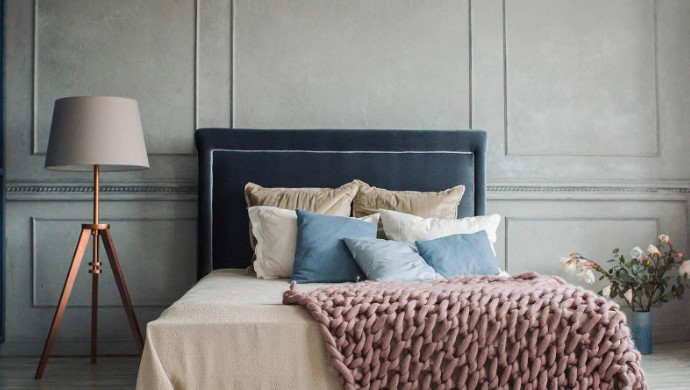
A small bedroom can feel open and restful with the right paint on its walls. Pale surfaces reflect daylight well, and the colours we pair together decide whether a room feels roomy or closed in. Choosing colour combinations for bedroom walls is less about trends and more about how each colour behaves in your light. Quality paints in soft, airy tones can stretch a compact room without any structural change. A good pairing also sets the mood you wake up in. Each combination below comes with what its colours signify, how it makes a room feel more spacious and a few practical painting tips.
White and Green
White signifies light, cleanliness and a fresh start, while green stands for calm, nature and gentle renewal. Together they give a bedroom an airy, unhurried feel. The white reflects daylight across the room, and the cooler green recedes slightly, so the walls seem further away and the space feels wider. This pairing suits rooms with a single small window.
These tips help the pairing work in a compact room:
- Paint three walls white and keep a soft green behind the bed.
- Pick a green with a grey undertone so it stays gentle.
- Add white bedding to carry the brightness through.
Grey and Blue
Grey signifies order, neutrality and composure, while blue brings serenity and a sense of rest. Pale grey works as the main colour, with a soft blue introduced on one wall or through the curtains. Both are cool tones, and cool tones seem to move away from the eye, so the corners soften and the room feels broader.
Here is how to make the most of this duo:
- Keep the grey light enough to reflect lamp and daylight.
- Use the blue on the wall opposite the window for added depth.
- Finish the ceiling in white to lift the eye upwards.
Cream and Pink
Cream signifies warmth, comfort and softness, while pink carries a tender, affectionate mood. Cream on most walls spreads light evenly, and a single pink wall adds cosiness in a tone light enough to keep the room open. The gentle shift between the two interior paints gives the eye somewhere to travel, which makes the space feel layered and larger.
A few details keep this warm pairing from feeling heavy:
- Choose a pale pink with a touch of peach.
- Limit the pink to one wall.
- Match the skirting boards to the cream so the edges blur.
Blue and White
Blue signifies peace, sleep and a clear sky, while white stands for purity and space. Place a pale blue on the walls and finish the ceiling and trim in white. The blue mimics open air and the white ceiling lifts the eye upwards, so the room gains a feeling of height as well as width.
These choices suit this pairing best:
- Pick a matt finish to soften glare on the blue.
- Paint the skirting boards and door frames in white.
- Choose a blue with a hint of grey for a calmer result.
- Keep the furniture light so the walls stay in focus.
Beige and Brown
Beige signifies stability and ease, while brown stands for warmth, grounding and security. Cover most of the room in light beige and limit a soft brown to a single wall at the far end. The darker shade creates a sense of perspective, much like a distant horizon, so the bedroom appears to stretch further back than it really is.
These points keep the darker shade working in your favour:
- Apply the brown to one wall only.
- Choose a milky, light brown rather than a deep chocolate.
- Keep the ceiling in white or a pale tint of beige.
Yellow and Grey
Yellow signifies cheer, energy and sunlight, while grey brings calm and steadiness. A pale yellow makes a room feel lit even on dull days, and grey stops it from becoming too bright. The warm glow of yellow brings in light, while the cool grey keeps the walls from closing in. Together they keep a small bedroom feeling open, welcoming and easy to relax in.
This is how to use the pairing in a small room:
- Choose a soft, buttery yellow for most of the walls.
- Use light grey on the ceiling or one side wall.
- Add white curtains to let more daylight through.
Conclusion
Small bedrooms respond well to pale, soft and thoughtfully paired colours. Pick one light base, add a supporting tone for depth and keep the ceiling and trim in white or a gentle tint of the wall colour. Test a swatch at different times of day before you commit, since daylight and lamps change how every colour looks. With a little planning, even a compact room can feel open, calm and comfortable, and every evening in it will feel more restful.