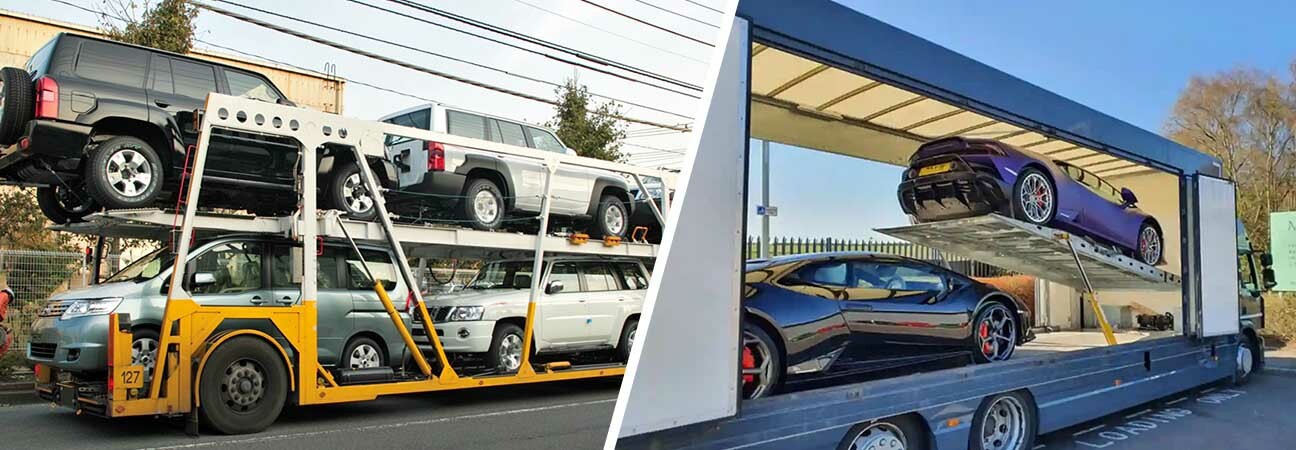
Choosing between open and enclosed transport is one of the biggest decisions in vehicle shipping. Most people start with price, but that is only half the equation. The real decision comes down to cost, safety, vehicle value, and how much risk you are willing to accept during transport.
If you are comparing options, understanding the difference between open and enclosed car shipping is the fastest way to avoid making a lazy decision based only on the cheapest quote.
What Is the Difference Between Open and Enclosed Car Transport?
The difference is simple.
Open car transport moves vehicles on an open trailer, the same type of carrier most people see on highways every day. It is the most common option and is widely used for standard vehicles.
Enclosed car shipping moves vehicles inside a covered trailer. That added protection reduces exposure to weather, road debris, dust, and outside conditions during transit.
Both are legitimate transport methods. The right one depends on the type of vehicle and what matters more to you: lower cost or added protection.
Open vs Enclosed Car Transport: Cost Comparison
If price is your main concern, open transport usually wins.
Open transport is generally more affordable because it is more common, easier to schedule, and allows carriers to move more vehicles at once. That efficiency lowers the cost per shipment.
Enclosed car shipping usually costs more because:
- enclosed trailers carry fewer vehicles
- carrier availability is more limited
- the service provides added protection
- specialty vehicles often require more careful handling
The blunt truth is this: enclosed transport is a premium service. If you want the extra protection, expect to pay for it.
That does not mean enclosed is overpriced. It means many people compare the two options without understanding they are buying different levels of protection.
Open vs Enclosed Car Transport: Safety Comparison
This is where buyers need to think clearly.
Open transport is safe enough for most everyday vehicles. Millions of cars are moved this way without issue. For a standard sedan, SUV, or pickup, open shipping is usually a perfectly reasonable choice.
But enclosed car shipping offers a higher level of protection. Because the vehicle is covered, it has less exposure to:
- rain, snow, and weather conditions
- road debris and dirt
- dust and highway grime
- general outside exposure over long distances
So if you are asking which option is safer, the answer is enclosed transport. That is not marketing. That is basic logic.
The better question is whether the extra safety is necessary for your specific vehicle.
When Open Car Transport Makes Sense
Open transport is usually the right option when:
- the vehicle is a standard daily driver
- cost matters more than premium protection
- the vehicle does not have rare, fragile, or high-value features
- you want the most common and widely available shipping method
For most ordinary vehicles, open transport gives a strong balance between affordability and practicality.
When Enclosed Car Shipping Is Worth It
Enclosed car shipping usually makes more sense when:
- the vehicle is classic, exotic, luxury, or collectible
- the car has custom paint or restoration work
- you want added protection during long-distance transport
- the vehicle has sentimental or investment value
- you are shipping a show car, project car, or specialty vehicle
This is where people make the wrong move. They spend heavily on the car, then suddenly become cheap about transport. That is backwards. If the vehicle is valuable enough, enclosed shipping is usually the smarter decision.
Is Enclosed Car Shipping Safer for Long-Distance Moves?
Yes, in terms of protection.
For long-distance shipping, the vehicle spends more time on the road, which increases total exposure to weather and debris. That is one reason many owners of classic, exotic, and high-end vehicles choose enclosed car shipping for cross-country moves.
If the vehicle is valuable and the route is long, enclosed transport becomes easier to justify.
Is Open Transport Unsafe?
No. That is the wrong conclusion.
Open transport is not unsafe. It is simply less protected. There is a difference.
For a normal everyday car, open transport is often the practical choice and works well. The mistake is assuming open and enclosed offer the same protection just because both get the car from point A to point B.
They do not.
How to Choose Between Open and Enclosed Transport
Ask yourself these questions:
- What is the car actually worth?
- Would weather or road debris matter for this vehicle?
- Is the vehicle restored, rare, luxury, or custom?
- Am I more concerned about price or maximum protection?
- Is this a short move for a standard car, or a long move for a higher-value vehicle?
If the vehicle is normal and replaceable, open transport usually makes sense.
If the vehicle is special and expensive to repair or protect, enclosed car shipping is usually the better call.
Final Verdict: Open vs Enclosed Car Transport
If your goal is the lowest cost, open transport is usually the better option.
If your goal is the highest level of protection, enclosed car shipping is the better option.
That is the real comparison. Open transport wins on price. Enclosed transport wins on safety and protection. The right choice depends on the vehicle, the route, and how much risk you are willing to accept.